
You’ve priced a flight to Lisbon, a hostel in Budapest, and a train to Zagreb, and the total already looks nothing like the “$5,000 European vacation” warning your friends keep repeating. That’s because they’re pricing London and Zurich, not the Europe most backpackers actually visit. The real number is smaller, specific, and depends entirely on which half of the continent you point yourself toward — and that’s exactly what this guide breaks down.
What a Europe Trip Actually Costs Per Day in 2026
35-50aday∗
∗istherealisticbackpackerrangeonceyouweightittowardEasternEuropeandtheBalkansratherthanWesterncapitals.A14−daytriponthatbudgetlandsaround∗∗490–700, excluding flights. Add a round-trip ticket (300–600dependingonorigin)andtravelinsurance(30–50), and a full two-week europe trip budget comes to $900–1,200.
Push harder into the cheapest regions and $25–30 a day is achievable without feeling like you’re skipping meals — the Balkans circuit below shows exactly where that number comes from.
Why “Europe Is Expensive” Is Only Half the Story
The 5,000−
vacationreputationcomesalmostentirelyfromWesternEuropeancapitals—London,Paris,Amsterdam,Zurich—whereacoffeecanrun5–6 and a hostel dorm starts at 35.ButEuropeis44countries,notfour,andthepricegapbetweenthemisenormous.30 a day buys a comfortable trip in Sarajevo. The same $30 in Zurich barely covers lunch.
The actual skill in planning a europe trip budget isn’t cutting corners everywhere — it’s choosing a route where your money is worth more, then spending deliberately in the one or two cities that are worth the premium.
The Balkans: Europe’s Most Underpriced Region, With Real Numbers
Most budget guides lump “the Balkans” into one vague $20–30/day line. The actual country-by-country spread is wider than that, and worth knowing before you build a route:
| Country | Daily budget | Notes |
|---|---|---|
| Albania | $27–38 | Cheapest country on the circuit; Tirana hostel dorms run $13–20/night |
| North Macedonia | $30–41 | Ohrid lakeside runs slightly higher in summer |
| Serbia | $32–45 | Belgrade’s nightlife is where costs creep up |
| Bosnia & Herzegovina | $32–45 | Mostar is pricier than Sarajevo |
| Montenegro | $43–60 | Kotor’s coast inflates hard in peak season |
| Croatia (Dubrovnik) | $60–81 | The most expensive stop on the whole circuit |
| Slovenia | $54–70 | Ljubljana and Bled both run high |
(Figures converted from the Balkans-specific cost data published by regional travel site TheBalkanGuide.com in September 2026; EUR converted at roughly 1.08 USD.)
A full six-week circuit through Albania, North Macedonia, Serbia, Bosnia, Montenegro, and Croatia runs approximately $2,700–3,200 all-in with flights from the UK — meaningfully less than six weeks spent entirely in Western Europe.
Cheapest Regions for a Budget-Friendly Europe Trip
Beyond the Balkans, here’s how the rest of the continent compares:
| Region | Daily budget | Best for |
|---|---|---|
| Balkans (Albania, Bosnia, Serbia) | $27–45 | Most economical, still underrated |
| Eastern Europe (Hungary, Poland, Romania) | $25–35 | Charming cities, consistently cheap |
| Portugal | $30–40 | Coast plus heritage on a budget |
| Spain, Greece | $35–45 | Classic Europe, still manageable |
| Italy, Croatia (non-Dubrovnik) | $40–55 | Pricier but workable |
| Western Europe (France, Germany) | $50–70 | Needs careful planning |
| Nordics (Norway, Iceland, Switzerland) | $80–120 | Expensive regardless of style |
A route that strings together the cheap regions — Poland → Czechia → Hungary → the Balkans, or Portugal → Spain → southern Italy — lets you dip into a pricier country for a few days without wrecking the total, as long as you balance it with cheaper stops before and after.
The Big Four Costs
Accommodation
- Hostel dorm: $10–20/night, lowest cost, common across Eastern Europe and the Balkans
- Private hostel room: $25–40/night
- Budget Airbnb: $30–50/night, worth it for groups staying 5+ nights
- Guesthouses/budget hotels: $25–50/night
Book hostels in Dubrovnik, Kotor, and Split 1–2 weeks ahead in peak season — these three sell out fastest. Everywhere else in the Balkans and Eastern Europe can be booked a few days out.
Food
- Supermarket meals: $3–8/day
- Street food: $2–5/meal
- Lunch specials: $8–12
- Full local restaurant meal, Balkans: 4–8(aSarajevocevapiplateruns3–5; a Belgrade kafana dinner with drinks is $8–12)
If a menu has photos and English-only text, it’s priced for tourists. Walk two streets back from any main square and prices usually fall by half.
Transport
- Buses (FlixBus, regional operators): $5–30/trip
- Balkans-specific bus routes: Tirana–Saranda 8.50–13,Sarajevo–Mostar8.50–13, Dubrovnik–Split $16–21
- Trains: $30–100+, cheaper booked 4–6 weeks ahead
- Budget flights (Ryanair, Wizz Air): $10–80 with early booking
Activities
- Walking tours (tip-based): $5–10
- Museums: $5–15, often free on specific weekly hours
- One splurge per city (thermal spa, boat trip, rafting): 20–40;Bosnia′sTaraRiverCanyonraftingruns54–76 for a full day — one of the best-value adventure activities on the whole continent
Sample 2-Week Budget Itinerary: Eastern Europe Into the Balkans
Days 1–3: Krakow, Poland — Old Town, Wawel Castle, a half-day at the Wieliczka Salt Mine. Hostel dorm. ≈$75–90 for three nights.
Days 4–6: Prague, Czechia — Bus from Krakow (5–6 hrs, 10–20).CharlesBridgeandOldTownSquarecostnothingtowalk.≈90–100.
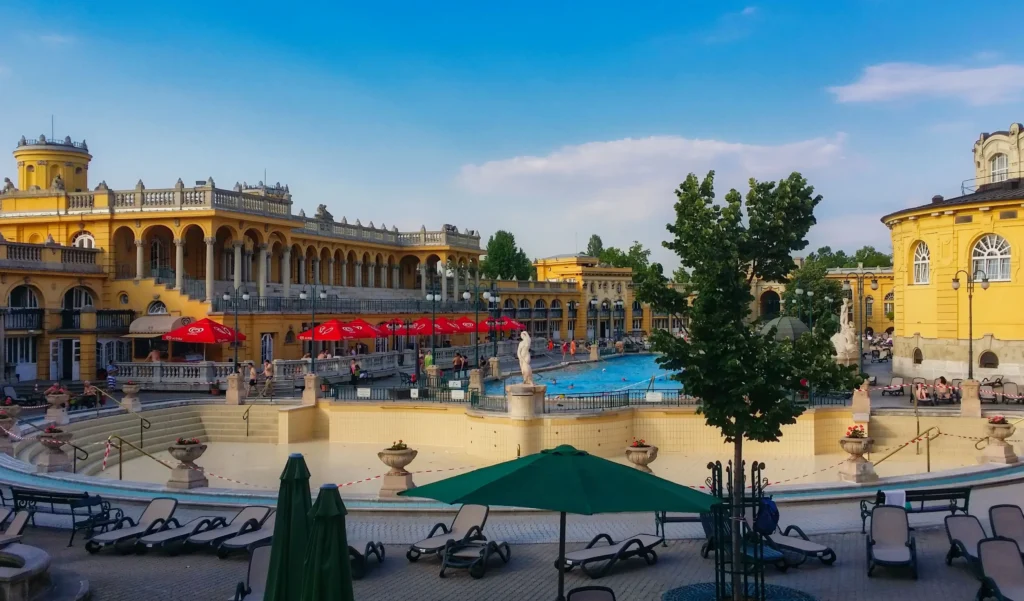
Days 7–9: Budapest, Hungary — Train from Prague (30–50bookedahead).Thermalsprings(15–25) are the one splurge worth it here. ≈$100–130.
Days 10–12: Belgrade, Serbia — Bus or overnight train (15–30)—thisiswherepricesvisiblydrop.KalemegdanFortressisfree;afullkafanadinnerwithdrinksis8–12. ≈$70–90.
Days 13–14: Sarajevo, Bosnia — Bus (4–5 hrs, 10–15).Basˇcˇarsˇijabazaar,TunnelofHopehistory,andsomeofthebestcoffeecultureintheBalkans.≈50–70.
Total for 14 days: roughly $385–490, excluding international flights.
Accommodation Platforms Worth Comparing

- Hostelworld — strongest hostel selection, filter by rating and price
- Booking.com — wider guesthouse/budget hotel range, free cancellation on most listings
- Airbnb — best value for groups of 3+ or stays over 4–5 nights
- Couchsurfing — free, but needs advance outreach and isn’t reliable for a fixed schedule
Money and Connectivity
Multi-country Balkans routes mean dealing with several different currencies and SIM cards. A regional eSIM covering Albania, North Macedonia, Serbia, Bosnia, Montenegro, Croatia, and Slovenia from one data plan typically runs $11–19 for 10GB — enough for two to three weeks of normal use, and far simpler than swapping physical SIMs at every border.
Don’t skip travel insurance. A single uninsured medical issue can run into the thousands, and care quality varies noticeably across the region — Serbia and Croatia are the most consistent; Albania and Bosnia need more caution for non-emergency situations.
Five Ways to Stretch a Europe Trip Budget Further
- Travel shoulder season (April–May or September–October) — cheaper flights and stays, still good weather.
- Cook breakfast in hostel kitchens. A supermarket breakfast costs 1.50–2.50versus5–8 at a café — this adds up fast over two weeks.
- Take the overnight bus between Balkans cities. Belgrade to Sarajevo overnight saves a night’s accommodation and lands you with a full day ahead.
- Cap Dubrovnik at two nights. It’s the most expensive stop on the entire circuit by a wide margin; two nights covers the essentials without the extra cost compounding.
- Avoid airport currency counters entirely. They consistently offer the worst exchange rates on the continent — use an ATM connected to your home bank’s partner network instead.
FAQ
How much budget do I need for a 2-week Europe trip? 35–50aday,orroughly490–700 for 14 days excluding flights. With a return flight and insurance, total costs typically land between 900and1,200.
Is the Balkans cheaper than the rest of Eastern Europe? Close, but Albania specifically undercuts almost everywhere else in Europe at 27–38/day.Hungary,Poland,andRomaniasitalittlehigherat25–35/day, with better-developed tourist infrastructure.
What is the cheapest way to visit Europe on a budget? Build your route around Eastern Europe and the Balkans, stay in hostel dorms, eat at supermarkets and local (not tourist-menu) restaurants, and book buses and trains ahead rather than last-minute.
Is $50 a day enough for Europe? Yes, comfortably in the Balkans and most of Eastern and Southern Europe. It’s workable even in pricier Western cities if you’re deliberate about where you sleep and eat.
Do I need a rail pass for a budget Europe trip? Only for long distances across many countries in a short window. For a standard 14-day, 4–5-country Balkans or Eastern Europe trip, individually booked bus and train tickets are usually cheaper than a multi-country rail pass.
Final Thoughts
A europe trip budget isn’t about avoiding the continent’s best cities — it’s about choosing which ones are worth the premium and which ones deliver the same experience for a third of the price. The Balkans prove that point better than almost anywhere else in Europe: Sarajevo’s bazaar, Belgrade’s fortress, and Albania’s coast cost a fraction of what Zurich or Paris charge for a comparable week, without cutting the experience short. Plan the route around the cheap regions, save the splurges for the places that earn them, and the budget takes care of itself.
For more regions broken down the same way, see our Morocco budget travel guide, Thailand itinerary, Vietnam travel budget, Egypt budget travel guide, or browse all our budget travel guides.
Prices in this guide were checked against live sources in October 2026, including Balkans-specific country costs from TheBalkanGuide.com. Re-check seasonal pricing before booking — Balkans bus fares run 20–30% higher in July–August.
Pingback: Morocco Budget Travel Guide 2026: What a Trip Actually Costs - chictravelist.com