
Morocco has two prices for everything: the price Moroccans pay, and the price you pay. Neither one is a scam. That gap isn’t greed either — it’s simply how a tourist economy works when the visitor has no way of knowing the difference between 30 dirhams and 90.
Almost every Morocco budget travel guide gives you a daily number and stops there. This one doesn’t. Below is what a Morocco trip costs in real dirhams in 2026, route by route — plus the costs that never make it into the daily figure and quietly add 1,100 to 2,055 MAD to a ten-day trip.
Every number in this Morocco budget travel guide was checked against live sources in September 2026. Exchange rates used throughout: 1 USD ≈ 9.6 MAD, 1 EUR ≈ 10.9 MAD.
What Morocco Actually Costs Per Day in 2026
The short answer: 170–300 MAD (18–31)perday∗∗asabackpacker,∗∗540–920MAD(18–31)perday∗∗asabackpacker,∗∗540–920MAD(56–96) mid-range, and 1,250–2,450 MAD ($130–255) for comfortable travel. That’s ground cost only — international flights are separate.
| Style | Bed | Food | Transport | Activities | Per day |
|---|---|---|---|---|---|
| Backpacker | 70–120 MAD dorm | 60–90 MAD street/local | 20–40 MAD | 20–50 MAD | 170–300 MAD ($18–31) |
| Mid-range | 300–450 MAD private room | 120–200 MAD mixed | 60–120 MAD | 60–150 MAD | 540–920 MAD ($56–96) |
| Comfort | 700–1,200 MAD riad | 250–450 MAD restaurants | 150–400 MAD | 150–400 MAD | 1,250–2,450 MAD ($130–255) |
That backpacker figure is real, and it’s the reason Morocco belongs next to the cheapest countries to travel in Africa rather than at the top of them. But notice what the table hides.. It assumes you pay the local rate for a bed, three meals and a taxi, every single day — and almost nobody does.
The Tourist Premium: The Costs That Never Make It Into Your Daily Budget
Here’s the part that has never appeared in the guides I read while researching this post. Take the same ten days and add up the costs that only exist because you’re a visitor:
| Line item | Real 2026 rate | Over 10 days |
|---|---|---|
| ATM flat fee, foreign card (all Moroccan banks, since Jan 2026) | ~35 MAD per withdrawal | 105 MAD (3 withdrawals) |
| Tourist tax (taxe de séjour) | 10–50 MAD per person, per night | 250 MAD (at ~25 MAD/night) |
| Guides and drivers, tipped | 100–200 MAD per guided day | 200–400 MAD |
| Restaurants, housekeeping, hammam attendant | 5–10% / 20–50 MAD | 150–300 MAD |
| The taxi meter gap (2 unmetered rides a day) | 20–50 MAD extra per ride | 400–1,000 MAD |
| Total | 1,105–2,055 MAD ($115–215) |
Two of those deserve a moment.
The taxi meter is the single biggest leak. In Marrakech the legal daytime rate is a 2.50 MAD flag fall plus 3.00 MAD per kilometre, with a minimum fare around 7.50–8.00 MAD. After 20:00 the tariff jumps to a 3.75 MAD flag fall plus 4.50 MAD per kilometre — 50% higher, legally. A metered cross-town ride costs 15–40 MAD. The same ride, quoted to a visitor who doesn’t ask for the meter, costs 50–100 MAD. That’s not a rounding error; it’s the price of ten days of not knowing.
The ATM fee is new and easy to miss. Since January 2026 every Moroccan bank charges a flat ~35 MAD on foreign-card withdrawals, on top of whatever your own bank charges. Withdrawal caps are often as low as 2,000 MAD (BMCI allows up to 4,000). Take three small withdrawals instead of one big one and you’ve handed over more than a night in a hostel dorm for nothing.
None of this means Morocco is a rip-off. It means the honest daily number isn’t the daily number.
Accommodation: What 120 MAD a Night Buys, and What 700 MAD Buys
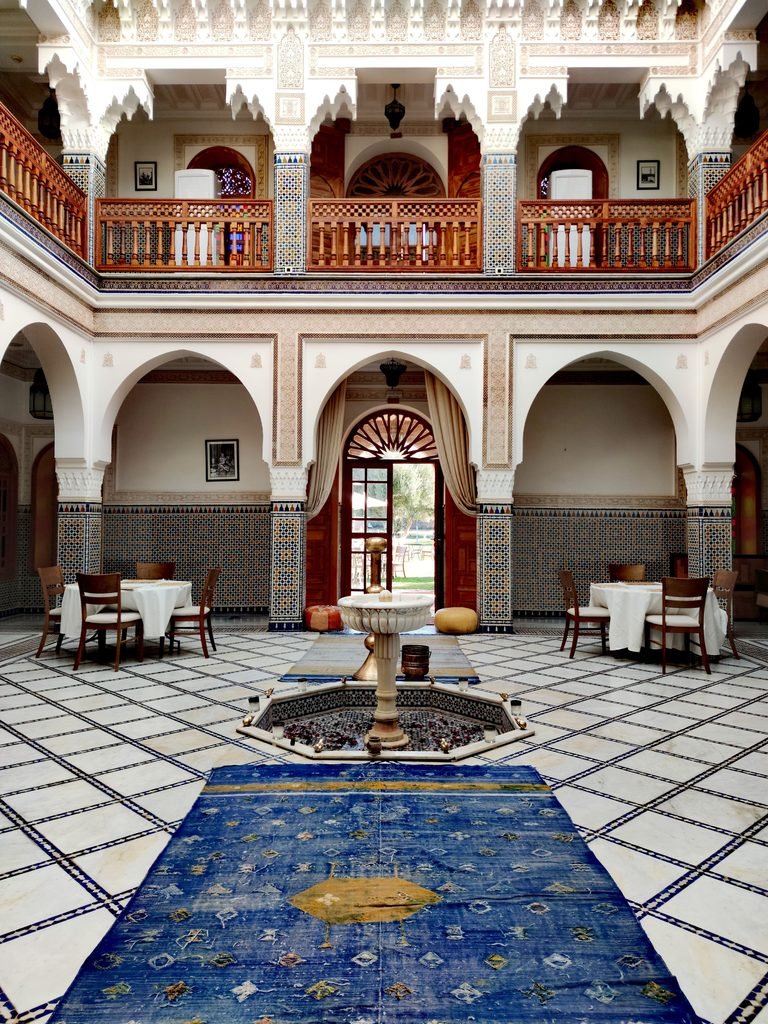
Morocco has the widest accommodation spread of almost anywhere I’ve costed. The same night can cost less than a sandwich in Europe or more than a hotel in Lisbon.
| Type | Price per night | What you actually get |
|---|---|---|
| Hostel dorm (Marrakech, Fes, Chefchaouen) | 70–120 MAD (€6–11) | Bunk, shared bathroom, usually a rooftop terrace |
| Hostel dorm, central Marrakech | 120–180 MAD | Better location, sometimes breakfast |
| Private guesthouse room | 150–300 MAD | Own room, breakfast almost always included |
| Basic private room / budget riad double | 200–380 MAD (€25–35) | Zellige, courtyard, thinner walls than the photos suggest |
| Comfortable mid-range riad | ~700 MAD | Courtyard, rooftop, breakfast, actual heating |
| Atlas guesthouse (Imlil) | from ~315 MAD ($33) | Family-run gîte, home cooking, trailhead location |
| Desert camp, basic Berber tent | 450–750 MAD per person | Half board and a camel trek usually bundled in |
| Desert camp, en-suite or glamping | 750–2,800 MAD per person | Private bathroom, hot shower, real beds |
Two things to know. First, the tourist tax is not in those prices. It runs 10–50 MAD per person per night depending on the property’s star rating, and it’s collected on arrival. Real rates I found on named riads ranged from 23 MAD to 41.80 MAD per person per night. Second, the dorm math changes everything. Ten nights in dorms at 100 MAD is 1,000 MAD. The same ten nights in mid-range riads is 7,000 MAD. That one choice is worth more than every money-saving trick in this article combined.
My honest recommendation: dorm it in Marrakech, Fes and Chefchaouen, where you’re out all day anyway — then spend the difference on one proper desert camp. In the Sahara the room is the experience.
Food: Where a Tagine Costs 35 MAD and Where It Costs 90
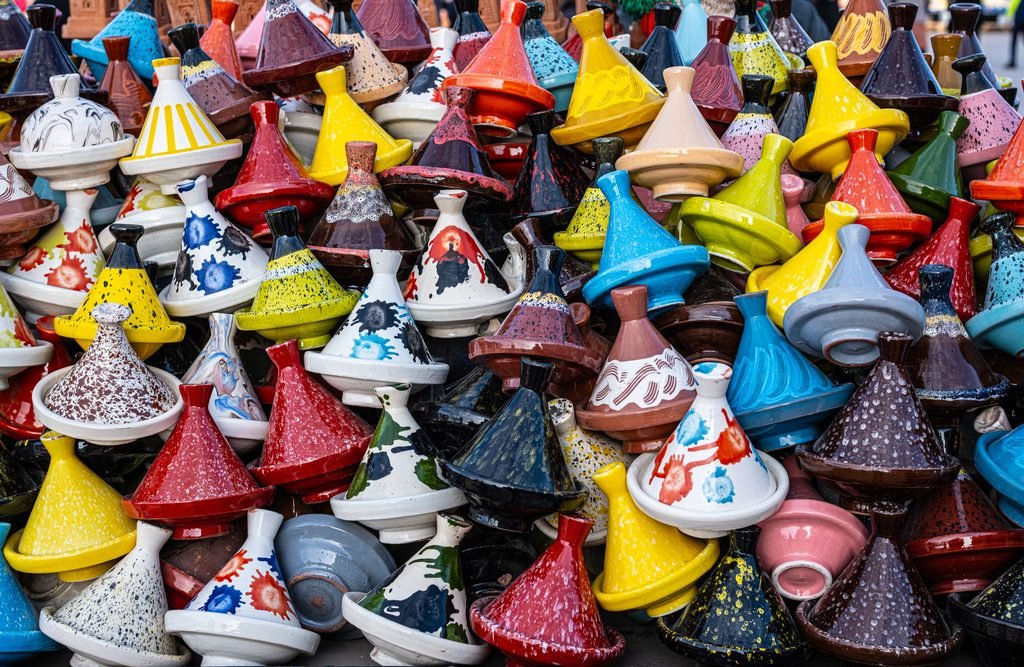
Food is where Morocco’s two-price system is most visible, and where you have the most control.
| Item | Local price | Tourist-zone price |
|---|---|---|
| Harira soup | 5–8 MAD | 15–25 MAD |
| Msemen (flaky flatbread) | 3–10 MAD | 15–20 MAD |
| Kefta or merguez sandwich | 10–25 MAD | 30–50 MAD |
| Tagine (chicken, local restaurant) | 35–55 MAD | 60–90 MAD |
| Couscous (Friday, neighbourhood spot) | 40–60 MAD | 90–140 MAD |
| Coffee / café au lait | 8–15 MAD | 20–35 MAD |
| Mint tea | 4–10 MAD | 20–35 MAD (hotel terraces) |
| 1.5L bottled water | 5–8 MAD | 10–20 MAD |
| Beer (small bottle) | 35–60 MAD | 60–90 MAD |
| Wine (glass) | 60–120 MAD | 100–160 MAD |
Groceries from a local market are almost absurdly cheap: a loaf of bread around 5.70 MAD, a dozen eggs around 12 MAD, a kilo of tomatoes under 5 MAD, a litre of milk around 7 MAD. Breakfast of msemen and mint tea is under 15 MAD. A day of eating street food properly costs 60–90 MAD — the same as a single main course on a Marrakech rooftop.
The rule I’d give anyone: eat where the menu has no English on it. That’s it. That’s the whole trick. Alcohol is the exception to everything — Morocco is a Muslim country, booze is taxed accordingly, and if you drink you’ll double your food budget without noticing.
Getting Around: Train, Bus and Taxi Fares in Real Dirhams
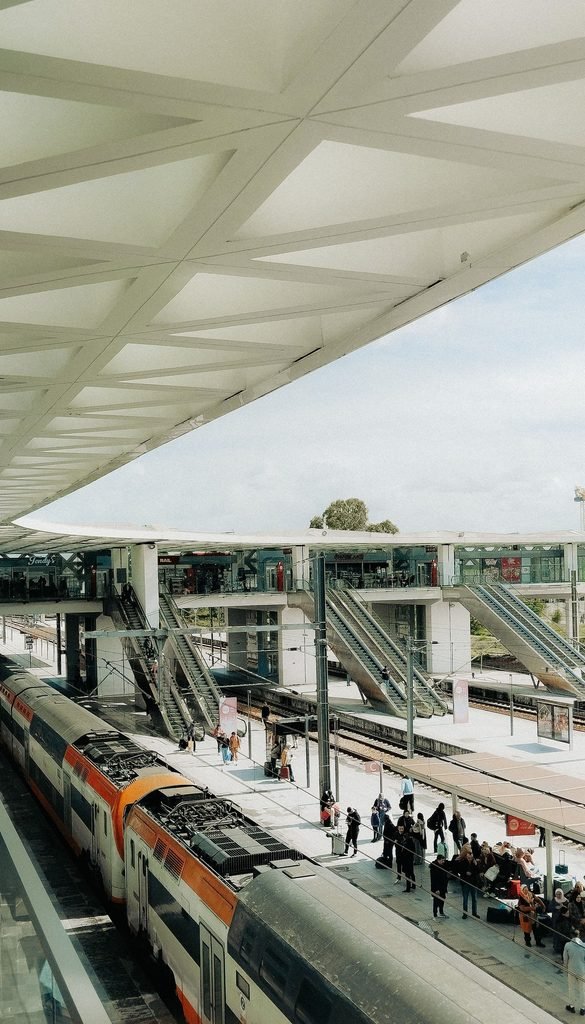
Morocco’s transport is cheap, and the network decides your route more than the map does.
Trains (ONCF) — comfortable, punctual, second class is the value pick:
| Route | Time | 2nd class fare |
|---|---|---|
| Marrakech – Casablanca | 2h 40m | 95–120 MAD |
| Casablanca – Fes (Al Atlas) | 3h 45m | 115–140 MAD |
| Tangier – Casablanca (Al Boraq high-speed) | 2h 10m | 115–190 MAD |
| Marrakech – Fes | ~6h 30m | ~165 MAD |
First class is only 30–50% more, which is worth it exactly once — on the long Marrakech–Fes run. Note that Al Boraq doesn’t run to Fes; that route is the conventional Al Atlas service. Marrakech–Fes is served direct on some departures and with a change at Casablanca on others, so check oncf-voyages.ma before you build a day around it.
Buses (CTM and Supratours) — the cheap backbone, and the only sensible way south:
| Route | Time | Fare |
|---|---|---|
| Fes – Chefchaouen | 4–4h 30m | 75–100 MAD |
| Marrakech – Essaouira | 2h 30m–3h | 80–100 MAD |
| Marrakech – Casablanca | 3h 15m | 110–210 MAD |
| Marrakech – Fes | 7–8h | 150–180 MAD |
| Marrakech – Merzouga (Supratours, direct, daily 08:30) | 12h | 260–280 MAD |
Local transport — where the tourist premium lives:
- Petit taxi (metered, Marrakech daytime): 2.50 MAD flag fall + 3.00 MAD/km, minimum ~7.50–8.00 MAD
- Petit taxi after 20:00: 3.75 MAD flag fall + 4.50 MAD/km (legally 50% higher)
- Grand taxi, Fes–Chefchaouen (shared, per person): 100–120 MAD
- Marrakech airport bus, Line 19: 30 MAD one way
- Marrakech airport taxi: 100–150 MAD daytime, 150–240 MAD at night
That last pair is the whole article in two numbers. The bus and the taxi leave from the same terminal and arrive in the same city centre. One costs 30 MAD and one costs up to 240 MAD.
Arriving overland from Europe? The Tarifa–Tangier Ville ferry takes about an hour and starts around €40 one way — often cheaper than the flight you’d otherwise book from Spain. If you’re already planning a Europe trip budget, it’s the cheapest link between the two continents.
The Sahara: Group Tour or DIY? Costed Both Ways
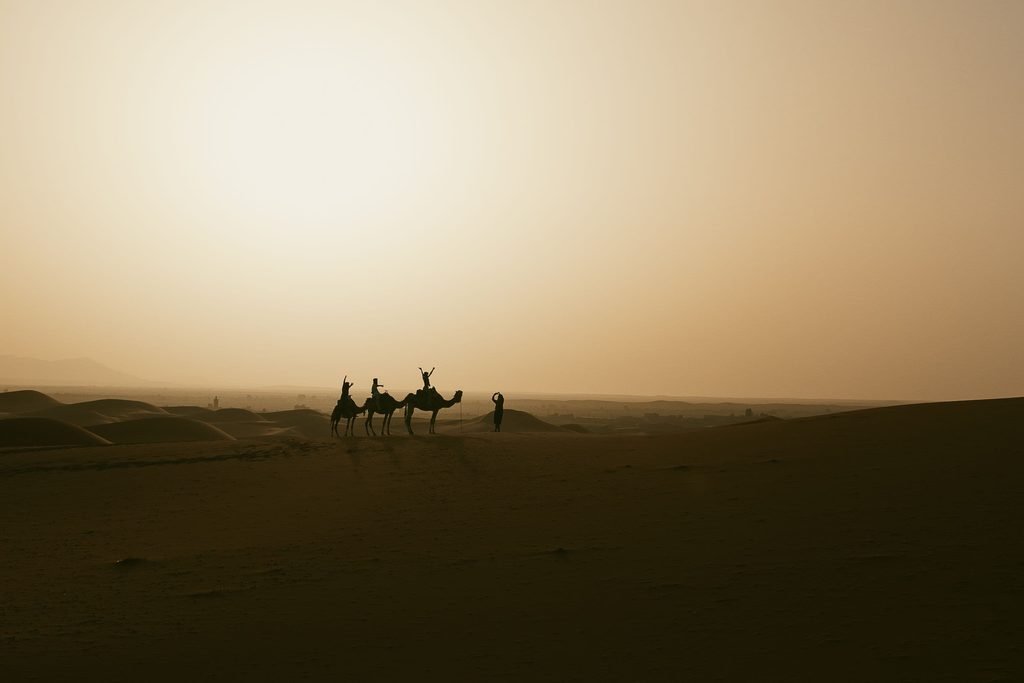
Every guide says the same thing: skip the tour, do it yourself, save money. I ran the numbers and that advice is mostly wrong. Here’s the same trip, costed both ways for one person:
| Cost line | 3-day / 2-night group tour | DIY by bus, same duration |
|---|---|---|
| Transport Marrakech ↔ Merzouga | included | 520–560 MAD (Supratours, 12h each way) |
| Overnight on the way (Dades) | included | 150–300 MAD |
| Desert camp night, half board + camel trek | included | 450–750 MAD |
| Meals in transit | 60–120 MAD per lunch, extra | 200–400 MAD |
| Tips (driver, camel guide, camp staff) | 350–800 MAD | 50–150 MAD |
| Total per person | 1,670–2,840 MAD ($175–295) | 1,370–2,160 MAD ($145–225) |
The sticker price people compare is 1,200–1,800 MAD for a shared group tour against a bus ticket of 260–280 MAD each way — and on that comparison, DIY wins easily. Add the lunch stops and the tips the tour price quietly excludes, though, and the two land in overlapping territory.
What DIY really costs you is two full days on a 12-hour bus and a camp bed booked at walk-up rates. On a ten-day trip, that’s a fifth of your holiday spent watching the same landscape from a window.
So pick by what you’re optimising:
- Group tour, booked locally rather than online: 1,200–1,800 MAD per person. Best value overall, and the version I’d recommend. Book it in Marrakech or Merzouga, in person, and expect the same itinerary the platforms sell for more.
- Private 4×4: 2,400–3,800 MAD per person, or €690 solo, €380 each for two, €230 each in a group of six. Worth it only if you’re splitting it, or if you want control over where you stop.
- DIY by bus: 1,370–2,160 MAD and two days of your trip. Only better if you’re staying in Merzouga for a while anyway — it’s the slow route, not the cheap trick.
- The 2-day/1-night Zagora version is the false economy: 850–1,200 MAD, and it takes you to a rocky flats area rather than proper dunes. If you can only afford one desert night, save a bit longer and go to Merzouga.
- Add-ons to price before you say yes: quad biking at €50–80, and a luxury camp night at 1,500–2,500 MAD per person if you’re tempted to upgrade.
Three Routes, Three Real Budgets
Abstract daily figures are useless for planning. If there’s one table worth bookmarking in this Morocco budget travel guide, it’s this one: what three actual Morocco routes cost one backpacker, at backpacker prices, including the tourist premium.
| Route | Days | Ground cost, 1 person |
|---|---|---|
| Imperial Cities + Rif: Casablanca → Rabat → Fes → Chefchaouen → Tangier | 10 | 3,000–5,000 MAD ($310–520) |
| Deep South + Sahara: Marrakech → Aït Benhaddou → Dades → Merzouga → Fes | 12 | 4,600–7,800 MAD ($480–810) |
| Atlas add-on: 2-day Mount Toubkal trek from Imlil | +2 | 1,100–3,800 MAD ($115–395) |
Three notes on those numbers. The northern route is the cheapest trip in Morocco because the train network does the work and there’s no desert tour to pay for. The southern route costs roughly 60% more, and almost all of that difference is the tour, the camp and twelve hours of bus fare. The Toubkal trek swings wildly because it’s entirely a question of group size: the same two-day guided summit costs €165 per person in a group of five and €350 solo. There’s no park fee and no permit, so the entire cost is the guide, the refuge and your food.
For comparison, a two-week shoestring trip through Thailand or Vietnam lands in the same band as that northern Morocco route — and does it with less travel time. Morocco isn’t more expensive than Southeast Asia. It’s just less forgiving of a bad plan.
The One-Off Costs People Forget
The daily budget doesn’t include any of this, and some of it decides whether you get in at all.
- Entry rules. US, UK and EU passport holders enter visa-free for up to 90 days. India and Pakistan are not on Morocco’s visa-exempt list, so a visa is required — apply through Morocco’s official online pre-travel portal (acces-maroc.ma) and confirm the current fee there rather than trusting third-party sites. Whichever passport you hold, you need six months of validity beyond arrival and at least one blank page.
- Travel insurance. Around €30–60 for two weeks for medical-evacuation cover.
- Mobile data. A local tourist SIM is 100–300 MAD for 10–20 GB — Maroc Telecom’s 10 GB pass is 100 MAD, inwi’s 20 GB Data Max is 100 MAD, Orange’s tourist 20 GB is 200 MAD. An eSIM for 10–20 GB runs $17–35. Roaming will cost you more than either.
- Overland entry. Tarifa–Tangier ferry from around €40, about an hour.
- Cash buffer. Keep 10–15% of your total aside for border fees, tourist tax collected on arrival, and the taxi you’ll take when the bus has gone.
When to Go If Price Matters More Than the Weather
March is the cheapest month to be in Marrakech, averaging around 102aday,againstroughly168 in peak July. Those are averages across all travel styles, but the pattern holds for budget travellers too.
| Period | Price | Trade-off |
|---|---|---|
| March | Cheapest of the year | Changeable weather, especially in the mountains |
| Late Jan – early Feb | Cheap | Cold nights, cold desert, cold riads |
| June | Cheap | Hot in Marrakech, genuinely hot in the south |
| September–October | Mid | Best weather-to-price balance of the year |
| April–May | Mid | Excellent weather, rising prices, busier sites |
| Easter, Christmas–New Year, July–August | Peak | Highest accommodation and tour prices |
Two warnings. Desert nights are cold in every season, so pack layers regardless of what month you book. And Ramadan moves roughly eleven days earlier each year, which shifts opening hours and can close some restaurants during the day — always check the dates for your specific travel year before booking, because a country on reduced hours is a country where your plan needs a backup.
Cash, ATMs and Tipping: The Money Mechanics
Morocco is a cash economy with a card façade. ATMs exist in every city; outside the cities and in the mountains and desert, they don’t. Assume you’ll be paying in dirhams for everything.
- Exchange rate, September 2026: 1 USD ≈ 9.6 MAD, 1 EUR ≈ 10.9 MAD
- ATM fees: flat ~35 MAD per foreign-card withdrawal at every Moroccan bank since January 2026, cap often 2,000 MAD
- Decline the ATM’s own conversion. Choose “without conversion” and let your bank do it in dirhams. The alternative adds 5–10%
- Notes: ATMs dispense 100 and 200 MAD notes. Break them at supermarkets and pharmacies — small vendors and taxi drivers rarely have change
- Euros: generally not accepted. Dirham is the only real currency; use a bureau de change or an ATM
- The dirham rule: the dirham isn’t convertible outside Morocco, and you can carry a maximum of 2,000 MAD in banknotes across the border. Spend it or change it back at the airport before passport control, and keep your exchange receipts
- Overland arrivals: keep change for border fees
Tipping isn’t optional in the way it is in Europe — it’s built into how people are paid:
| Who | How much |
|---|---|
| Restaurant | round up, or 5–10% if no service charge is included |
| Private guide | 100–200 MAD per day |
| Private driver | 100–150 MAD per day |
| Housekeeping | 20–50 MAD per stay |
| Porter | 10–20 MAD per bag |
| Hammam attendant | 20–50 MAD |
| Café / mint tea | 2–10 MAD |
And one more: a public hammam costs 15–25 MAD; the same scrub in a riad or tourist hammam costs 150–400 MAD. Both are excellent. Only one is a bargain.
Eight Ways to Shrink a Morocco Budget
- Sleep in dorms in the big cities and spend up in the desert. Dorm versus riad is worth 6,000 MAD across ten nights; the camp is the one place the money buys something you’ll remember.
- Ask for the meter, every time, out loud. Petit taxis are legally metered. The single biggest leak in a Morocco budget is the one you’re too polite to close.
- Withdraw bigger, withdraw less often. Each pull is ~35 MAD before your own bank’s fee.
- Take Line 19 from Marrakech airport (30 MAD), not a taxi (up to 240 MAD).
- Eat one meal a day on the street. Harira and msemen together is under 15 MAD. Do that daily and you’ve funded a domestic bus ticket every three days.
- Book the desert tour in person, not online. 1,200–1,800 MAD locally for the same itinerary the platforms package higher.
- Go in March or the shoulder months. March is the cheapest month of the year in Marrakech.
- Buy a local SIM (100–300 MAD) instead of roaming, and drink Friday couscous (40–60 MAD) instead of restaurant tagine. Cheap, and better.
FAQ
How much money do I need for 10 days in Morocco? Budget roughly 3,000–5,000 MAD (310–520)perpersonforabackpackertripexcludingflights,or6,500–11,000MAD(680–1,150) mid-range. Both figures include the tourist premium of 1,100–2,055 MAD that most budgets leave out.
Is Morocco cheap or expensive? Both, genuinely. A backpacker can live on 170–300 MAD a day. But a comfortable Morocco trip starts to look like southern Europe — quality riads, a desert tour and guides all add up fast — and the tourist tax, ATM fees and taxi meter gap add over 1,000 MAD to a ten-day trip no matter which style you pick.
Do I need cash in Morocco? Yes. ATMs are common in cities and rare in the mountains and desert. Since January 2026 every Moroccan bank charges a flat ~35 MAD on foreign-card withdrawals, so withdraw larger amounts less often — and always decline the ATM’s own currency conversion, which adds 5–10%.
Can I use euros in Morocco? Generally no. The dirham is the only currency accepted for normal transactions, and you can’t take more than 2,000 MAD in banknotes out of the country. Some high-end hotels and merchants will take euros or dollars at unfavourable rates — it’s never the better option.
Do I need a visa for Morocco? US, UK and EU passport holders don’t — visa-free for up to 90 days. India and Pakistan are not on the visa-exempt list, so a visa is required; apply through Morocco’s official portal at acces-maroc.ma and confirm the fee there. Everyone needs a passport valid at least six months beyond arrival.
How much does a Sahara desert tour cost? A 3-day, 2-night shared group tour out of Marrakech to Merzouga is 1,200–1,800 MAD per person, or 1,670–2,840 MAD once lunches and tips are added. A private 4×4 runs 2,400–3,800 MAD per person. A single basic camp night with half board and a camel trek is 450–750 MAD per person; luxury glamping is 1,500–2,500 MAD.
Final Thoughts: Is Morocco Still Cheap in 2026?
Yes — and it’s drifting upward at the same time.
Morocco drew a record 19.8 million international visitors in 2025, up 14% year on year, with travel receipts up 21% to around 138 billion MAD. By the end of August 2026 the country had already logged 14.1 million arrivals. Hotels know it: the restaurants-and-hotels price sub-index rose 3.3% in 2025, above headline inflation, and average daily rates across North Africa climbed about 10% in the same year. Morocco co-hosts the 2030 FIFA World Cup, and that’s the pressure everyone points at.
Here’s the honest version of that story, because you’ll read the other one elsewhere: hotel prices are rising, and the direction is clear. But no source actually proves 2026 is cheaper than 2027 or 2028, so “the last cheap year” is a marketing line, not a fact. Don’t book a trip you’re not ready for because of a countdown that hasn’t been verified by anyone.
What’s certain is simpler. A Morocco budget still works — 170–300 MAD a day as a backpacker, a ten-day northern route for 3,000–5,000 MAD, a Sahara night for 450–750 MAD — and it works far better when you know where the tourist premium hides. Check the meter. Decline the ATM’s conversion. Sleep in dorms in the cities and spend the difference on the dunes.
Then go read more Africa budget guides, because Morocco is the easiest African country to budget for and nowhere near the cheapest.
Prices in this Morocco budget travel guide were updated using traveler cost reports and verified 2026 pricing, checked September 2026. Re-check fares and entry fees before you book — Moroccan transport and site prices change without notice.
Pingback: Cheapest Countries to Travel in Africa: 2026 Budget Guide | Chictravelist
Pingback: Egypt Budget Travel Guide 2026: What Changed and What It Actually Costs - chictravelist.com
Pingback: Budget Safari Kenya Tanzania 2026: What It Really Costs - chictravelist.com